This Is What Happens When You Let Go and Just Feel Byblos
You know that magic moment when travel stops being about ticking boxes and starts feeling like real life? That’s exactly what hit me in Byblos, Lebanon. Wandering its stone alleys without a plan, I stumbled into art tucked in ancient corners, heard stories from potters who’ve shaped clay for decades, and sat through sunsets that painted the Mediterranean gold. This isn’t just sightseeing—it’s slow travel at its most soulful, where culture isn’t observed, it’s lived. In a world that often measures journeys by how many landmarks you photograph, Byblos teaches a different rhythm: one of presence, patience, and deep human connection. Here, time doesn’t move in minutes but in moments—shared laughter over mint tea, the scrape of a chisel on cedar wood, the hush that falls when the sea breeze stills between olive trees. This is what happens when you let go and just feel.
The Rhythm of Slow Travel in an Ancient Town
Slow travel is not simply a trend—it is a return to the essence of why we journey in the first place. In Byblos, this philosophy finds its natural home. The town, perched on Lebanon’s rugged coastline, pulses with a tempo that resists the urgency of modern tourism. There are no crowds rushing to catch a timed audio guide or ticking off monuments on a checklist. Instead, life unfolds in gentle waves: fishermen hauling in their morning catch, vendors arranging figs and thyme on wooden stalls, children chasing stray cats through sun-dappled lanes. This is not a performance for tourists; it is daily life, unchanged in rhythm for generations. The difference for the visitor is simple: you are not here to observe from the outside, but to step inside the rhythm itself.
Most guided tours compress Byblos into a two-hour stop between Beirut and the mountains. They cover the Crusader castle, snap a photo at the Roman amphitheater, and move on. But in doing so, they miss the heartbeat of the place. Slow travel in Byblos means allowing a single afternoon to stretch into golden hours by the harbor, where you watch the light shift from silver to amber as fishing boats return. It means lingering in the shade of a fig tree outside a centuries-old soap workshop, sipping sweet mint tea while the owner tells you how his grandfather made olive oil soap using the same cold-press method still used today. These moments don’t fit into an itinerary, but they shape memory.
What makes Byblos uniquely suited for this kind of immersion is its extraordinary continuity. Recognized as a UNESCO World Heritage site, it is one of the oldest continuously inhabited cities in the world, with evidence of settlement dating back more than 7,000 years. Phoenician traders once walked these same winding paths, building a port that would become a hub of Mediterranean commerce. The layers of history are not buried—they are visible in the stones beneath your feet, in the way alleyways curve around ancient foundations, in the quiet dignity of homes that have stood through empires. To walk here is to move through time, not as a spectator, but as a participant in an ongoing story.
Walking Through Layers of History and Art
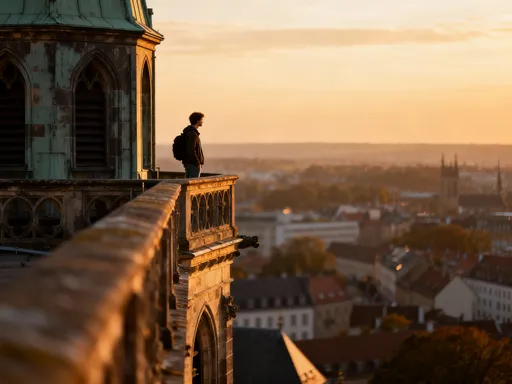
Every step in Byblos feels like turning a page in a living history book. The town’s architecture is not a museum exhibit but a continuous conversation between eras. On one corner, you’ll find a Phoenician wall—its massive limestone blocks fitted together without mortar, standing firm after millennia. Just steps away, a Roman colonnade leans gently with age, its columns cracked but still proud. Above it looms the Crusader-era castle, built by the Knights Templar in the 12th century, its battlements offering panoramic views of the sea and the red-tiled roofs below. And nestled between them all are Ottoman-era houses, their arched windows and wooden balconies painted in soft blues, ochres, and whites, blending seamlessly with the landscape.
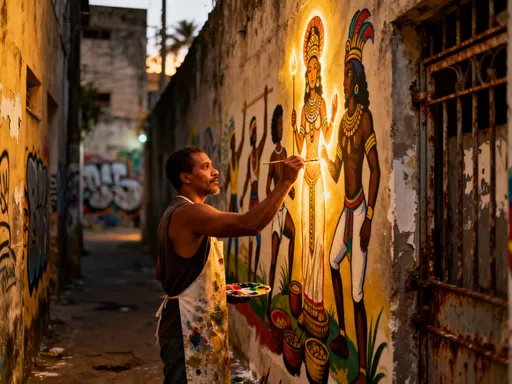
But the art of Byblos is not confined to its monuments. It spills into the streets, alive and evolving. In the souks, fabric dyers hang skeins of wool in vibrant indigo and saffron, colors derived from plants grown in the nearby hills. A cobbler repairs sandals by hand, his tools laid out on a cloth like offerings. On the shutters of a seaside café, a local artist has painted a mural of a Phoenician ship sailing toward the rising sun—a tribute to the seafarers who once launched from this very shore. These are not staged displays; they are expressions of identity, passed down and reinterpreted with quiet pride.
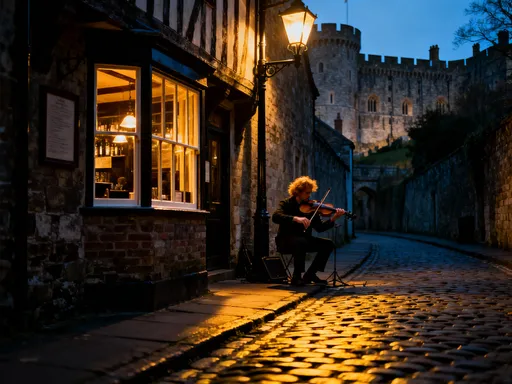
The harbor functions as an open-air stage where culture performs naturally. At dusk, families gather on stone benches to watch the sky ignite over the water. Fishermen mend nets with practiced hands, their movements rhythmic and unhurried. A street musician plays the oud, the notes drifting across the waves. There are no admission tickets, no scheduled performances—just life unfolding in its fullness. Public spaces in Byblos are not designed for tourism; they are designed for living. And in that authenticity lies their power to move the visitor, not with spectacle, but with truth.
Meeting the Makers: Craftsmanship That Breathes Tradition
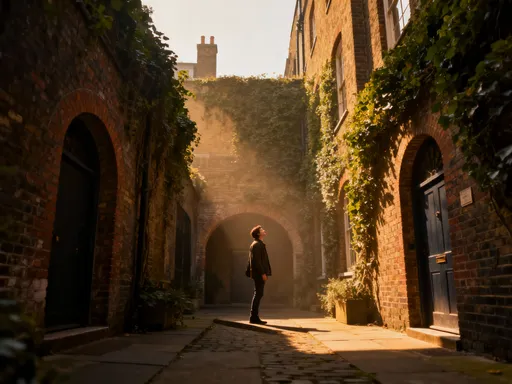
To understand Byblos is to meet its artisans—those quiet guardians of tradition who keep heritage alive not in textbooks, but in their hands. One morning, I visited a potter whose family has worked clay in this town for over five generations. His workshop was tucked into a narrow alley, lit by a single shaft of sunlight. There, on a hand-turned wheel, he shaped a vessel using techniques unchanged since the Bronze Age. When I asked how he learned, he smiled and said, “From my father, who learned from his. The hands remember what the mind forgets.” His pottery—earthy, unglazed, marked by fingerprints—was sold not in boutiques, but at the weekly market, where locals bought them for cooking, storing, or gifting.
Not far away, a woodworker restored old doors from Ottoman homes, using hand-carved cedar and traditional joinery. “These doors tell stories,” he said, running his fingers along an intricate geometric pattern. “Each home had its own design—like a signature.” He refused to use power tools, believing that the soul of the craft lies in the slowness, in the dialogue between wood and hand. His workshop smelled of resin and time, a scent that lingers in memory long after you leave.
Textile artisans, too, play a vital role. In a small atelier near the souk, women weave linen using looms passed down through families. Their patterns—diamonds, waves, stars—carry symbolic meanings tied to protection, fertility, and the sea. One weaver explained that her grandmother taught her to count threads by touch, not sight, because the work was often done by lamplight. Today, these fabrics are used in home décor, traditional clothing, and even modern fashion collections that seek authenticity. Supporting these crafts is not about buying souvenirs; it is about sustaining a lineage. When travelers take the time to visit, listen, and purchase directly, they become part of a chain that stretches back centuries.
Taste as Culture: Food That Tells a Story
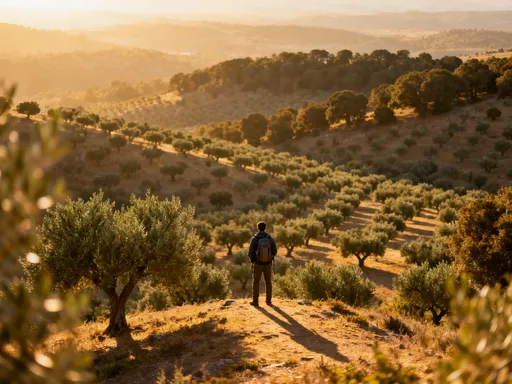
In Byblos, food is not merely sustenance—it is memory, identity, and hospitality woven into every bite. A meal here begins long before it reaches the table: in the olive groves where families harvest fruit by hand each autumn, in the stone mills where olives are pressed into golden oil, in the gardens where za’atar grows wild among the rocks. To eat in Byblos is to taste the land and the sea, seasoned with generations of care. The meze—the spread of small dishes served at nearly every meal—is not just a culinary style; it is a social ritual. Sharing hummus, baba ghanoush, grilled halloumi, and stuffed grape leaves is an act of connection, a way of saying, “You are welcome here.”
One of the most memorable meals I had was at a family-run restaurant tucked behind the castle. There were no menus—only a nod from the owner and a stream of dishes that arrived one by one, each introduced with a brief story. “This tabbouleh? My mother picked the parsley this morning. The tomatoes—grown in our cousin’s garden in the hills.” The olive oil, poured generously over everything, came from their own trees. As we ate, the owner’s daughter joined us, shyly offering fresh mint tea. No one rushed us. No one cleared our plates. We lingered for over two hours, talking, laughing, refilling glasses. Time, in that moment, was not measured by schedules but by satisfaction.
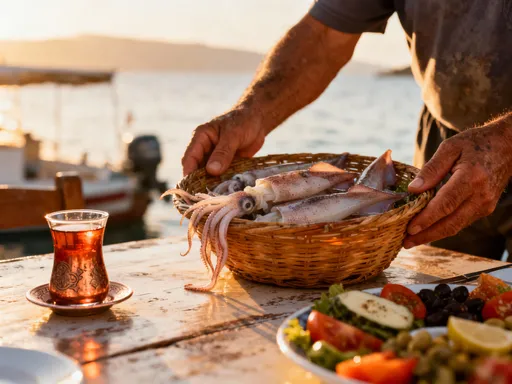
Fresh fish, caught daily, is another cornerstone of Byblos’ cuisine. At the harbor, fishermen bring in sea bass, sardines, and grouper, which are then grilled over charcoal at seaside grills. Eating fish here feels like participating in a tradition older than records—Phoenician traders once dined on similar meals as they prepared for long voyages. Even the bread tells a story: taboon bread, baked in clay ovens, emerges warm and blistered, perfect for scooping up dips or wrapping around grilled meats. To eat slowly in Byblos is to honor the labor behind each ingredient, to acknowledge the hands that grew, caught, and prepared it. It is, in every sense, a meal with meaning.
Finding Stillness: Moments That Define the Journey
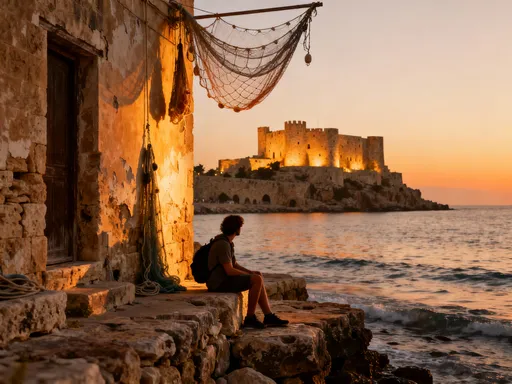
Some of the most profound experiences in Byblos happen in silence. At dawn, the town is hushed, the air cool and fragrant with jasmine and salt. I found myself drawn to the old port each morning, sitting on a stone ledge where the water lapped softly against ancient blocks. Fishermen worked in quiet coordination, mending nets, sorting catch, preparing for the day. Above them, the Crusader castle glowed in the rising light, its stones shifting from gray to rose. There was no agenda, no photo to capture—only presence. In that stillness, something inside me settled. The constant hum of planning, of doing, of moving on—finally quieted.
Another morning, I wandered into a hidden courtyard garden, accessible only through a narrow archway. It belonged to a private home, but the owner, seeing my curiosity, invited me in with a smile. Bougainvillea spilled over whitewashed walls, and a fountain trickled in the center. I sat on a stone bench, journal in hand, writing not notes, but reflections. The distant call to prayer echoed softly, blending with the chirp of sparrows. Time expanded. I wasn’t thinking about where to go next or what to see. I was simply there—breathing, feeling, being. These are the moments that stay with you, not because they were dramatic, but because they were real.
Slowing down creates space—not just in your schedule, but in your soul. It allows you to notice the way sunlight hits a mosaic, the sound of a blacksmith’s hammer in the distance, the warmth of a stranger’s smile when you say good morning in broken Arabic. These small sensations accumulate into a deeper understanding: that travel is not about accumulation, but about absorption. Byblos does not demand your attention; it earns it, gently, through moments of stillness that invite you to look inward as much as outward.
Practical Magic: How to Travel Byblos the Slow Way
Traveling slowly in Byblos begins with intention—and a few practical choices. First, consider where you stay. Family-run guesthouses, often converted Ottoman homes, offer a more intimate experience than chain hotels. These accommodations are typically small, with just a few rooms, and run by hosts who are eager to share local tips. Staying in the old town, rather than on the outskirts, means you can wander at any hour, discovering quiet corners at dawn or enjoying a late-night stroll along the harbor. Proximity to daily life is key to immersion.
Next, build a flexible routine. Resist the urge to over-schedule. Wake when you’re ready. Have breakfast at a local café—fresh manakish (flatbread with za’atar or cheese) and strong Arabic coffee—then set out with no fixed plan. Let curiosity guide you: follow the sound of hammering to a carpenter’s workshop, or the scent of grilled fish to a hidden eatery. Spend an hour watching artisans at work. Sit in a square and observe the flow of life. Talk to shopkeepers. Ask questions. Many speak English and appreciate genuine interest. The goal is not to see everything, but to see deeply.
Transportation is simple. Byblos is compact, and walking is the best way to experience it. The narrow streets are not designed for cars, and much of the old town is pedestrian-only. For longer distances—such as traveling from Beirut—shared taxis (called “service” taxis) are affordable and frequent. Trains do not currently run to Byblos, but the coastal road offers scenic drives. If coming from Beirut, avoid rush hour, as traffic can be heavy. Once in Byblos, leave the car behind. Let your feet lead you. This is not just practical—it is symbolic. To walk is to move at human speed, to notice what speed hides.
Why This Kind of Travel Matters
Slow travel in Byblos is more than a vacation—it is a quiet act of resistance against the culture of hurry. In a world that glorifies busyness, choosing to pause is revolutionary. It changes not only how you see a place, but how you see yourself. The connections you make—with artisans, with families, with the rhythm of daily life—leave lasting impressions. You begin to understand that culture is not something you consume, but something you participate in. And in that participation, you offer something in return: attention, respect, and the dignity of seeing people not as part of a backdrop, but as individuals with stories worth hearing.
This approach also supports sustainable tourism. When you buy directly from a weaver, dine at a family restaurant, or stay in a local guesthouse, your money stays in the community. You help preserve traditions that might otherwise fade. You become part of a cycle of care, where tourism is not extraction, but exchange. Small choices—asking permission before photographing, learning a few words of Arabic, leaving a place as you found it—carry weight. They reflect a deeper ethic: that travel should honor, not exploit.
Byblos is not just a destination. It is a feeling—a reminder that the world reveals itself only to those who pause. It teaches that the richest experiences are not found in grand gestures, but in quiet moments: the weight of a hand-thrown pot, the taste of oil pressed from local olives, the sound of waves against ancient stone. To travel slowly is to remember that we are not just visitors, but witnesses—to history, to culture, to the quiet beauty of lives lived with purpose. And when you return home, you carry more than photos. You carry presence. You carry peace. You carry the echo of a place that taught you how to feel again.